
TL;DR
A good exterior paint job in Philadelphia lasts about 8-12 years, but the number swings by surface and exposure: sun-blasted south and west walls burn through paint fastest, brick and stucco go longest, and trim and doors wear out soonest. Prep quality decides more than the brand in the can. For how our climate specifically chews on paint, see the climate durability guide.
In This Article
The most common question we get after finishing an exterior project is simple: "When will I need to do this again?" The honest answer is a range, not a number, because paint doesn't have a fixed expiration date. It has a lifespan that stretches or shrinks depending on what it's painted on, which way that wall faces, and how well the surface was prepped underneath. Get those right and you're planning your repaint on your schedule instead of scrambling when the paint starts peeling.
The Realistic Number: 8 to 12 Years
Top-line exterior paints get rated for 10-15 years, but that rating comes from ideal lab conditions: steady temperatures, low humidity, controlled UV, and a perfectly prepped substrate. That is not Philadelphia. Between our freeze-thaw winters, humid summers, and hard sun on the south and west sides, a well-prepped exterior job here realistically lasts about 8-12 years. Where your house lands inside that range comes down mostly to surface and exposure. The climate side of this deserves its own explanation, and we walk through freeze-thaw, painted brick, and mildew in detail in our Philadelphia climate and paint durability guide. This article stays focused on lifespan.
Lifespan Surface by Surface
Not every part of your house ages at the same rate. Here's how the common Philadelphia exteriors break down:
- Wood siding, south and west facing: 6-9 years. Wood moves with moisture and heat, and these walls take the worst of the sun, so the paint film works hardest here and fails first.
- Wood siding, north and east facing: 8-12 years. Less UV means slower fading and chalking, though the trade-off is more shade, more damp, and more mildew pressure.
- Brick and masonry: 10-15 years with the right breathable coating. Masonry doesn't flex the way wood does, so a properly applied coating that lets the wall breathe holds on a long time. The failure mode here is trapping moisture, not UV.
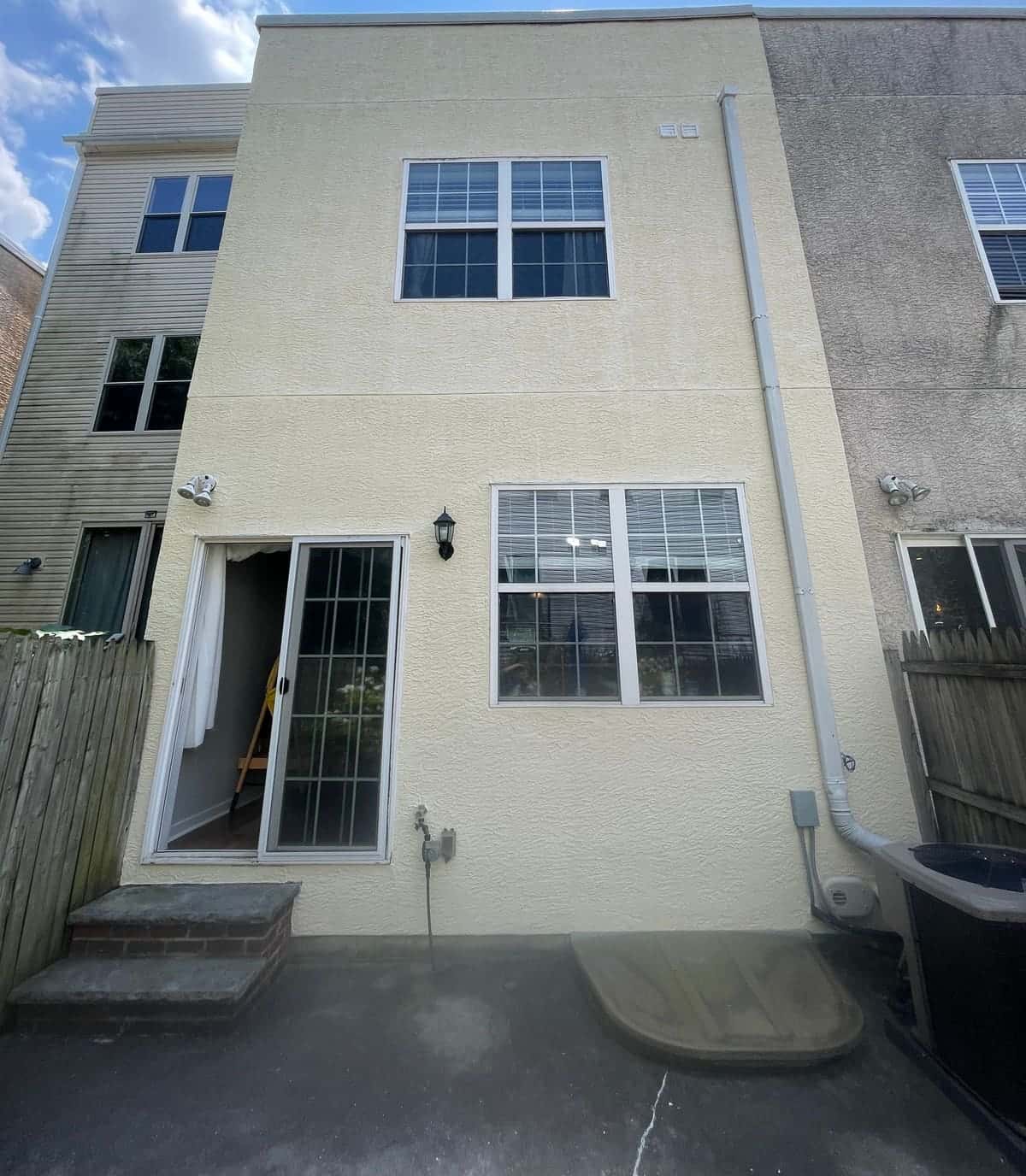
- Stucco: 8-12 years. Stucco is durable but develops hairline cracks that let water in, so its lifespan tracks with how well those cracks get sealed.
- Trim, doors, and windows: 5-8 years, the shortest of the bunch. These are the parts that get touched, bumped, rained on from every angle, and baked by sun, so they almost always need attention before the field of the wall does.
- Budget or badly applied paint, any surface: 2-4 years, and no exposure saves it.
The practical takeaway: don't think about repainting "the house" as one event. Your sunny front and your trim will be ready years before your shaded back wall.
Sun Exposure Is the Quiet Deciding Factor
Two identical houses on the same block can be on very different repaint clocks purely because of orientation. UV is what breaks paint down, fading the pigment and chewing up the resin binder until the film chalks and lets go. South and west elevations soak up the most direct sun, which is why the sunny side of a house almost always looks tired while the shaded side still holds color. If you want to see your own timeline, watch the south and west walls. They're the early-warning system for the whole exterior. Our long summer days pile up more of that UV exposure than a lot of people expect, and you can eyeball the seasonal swing in daylight and heat through the National Weather Service's Philadelphia office.
Prep Quality Beats the Brand in the Can
If there's one thing that decides paint lifespan more than any other, it's the surface underneath, not the paint on top.
Skipped prep is the number one killer. Paint rolled over failing old paint, moisture-damaged wood, or a slick unsanded surface will let go in 2-3 years no matter how good the product is. Scraping, sanding, spot-priming bare wood, and caulking every gap is unglamorous work, but it's the difference between an 8-year job and a 3-year job.
Moisture from behind ends jobs early. Failed caulk, bad flashing, a small roof leak, or vegetation trapping damp against the siding all push water into the substrate, and no paint film survives being pushed off from behind. Paint can't fix a water problem, it can only cover one for a while.
The wrong product for the surface shortens life too. A breathable masonry coating on brick, the right primer on raw wood, the right enamel on trim: matching the coating to the surface matters as much as the tier of paint.
Bad weather at application locks in early failure. Paint applied below 50°F won't cure properly, direct sun over 85°F causes lap marks and poor bite, and humidity over 70% traps moisture in the film. A job started in the wrong window fails early even with a flawless product.
How to Stretch the Years You've Got
- Top-line professional-grade paint rather than a budget line, since the paint is a small part of the total cost but a big part of the lifespan
- Complete surface prep: scraping, sanding, priming bare areas, and caulking every penetration
- Mildewcide on north-facing and shaded walls that stay damp
- A breathable coating on masonry so the wall can dry out instead of spalling
- An annual walk-around each spring to catch and caulk small cracks before water gets behind the film
- Keeping shrubs and vines cut back off the siding so walls dry out between rains
The houses that reach the far end of the 8-12 year range are almost always the ones getting looked at, not the ones left alone until the paint is visibly gone.
When to Repaint vs. Touch Up
Spot-treating peeling or damaged areas makes sense when less than about 20% of the surface needs attention. Past that, spot repair stops being a real fix. Once failure is widespread, the surrounding paint has simply reached end of life, and fresh patches won't blend as everything around them keeps failing on its own schedule. At that point you're better off repainting the affected elevation than chasing patches around it.
An honest painter will tell you when it's genuinely time for a full repaint instead of selling you spot repairs that just push the real work down the road.
Call Color House Painters at (215) 715-4647 for a free exterior assessment and an honest read on where your home stands.

Color House Painters
Residential and commercial painters working across Philadelphia since 2015. Licensed and insured, from Center City condos to Chestnut Hill Victorians.
Call Now